
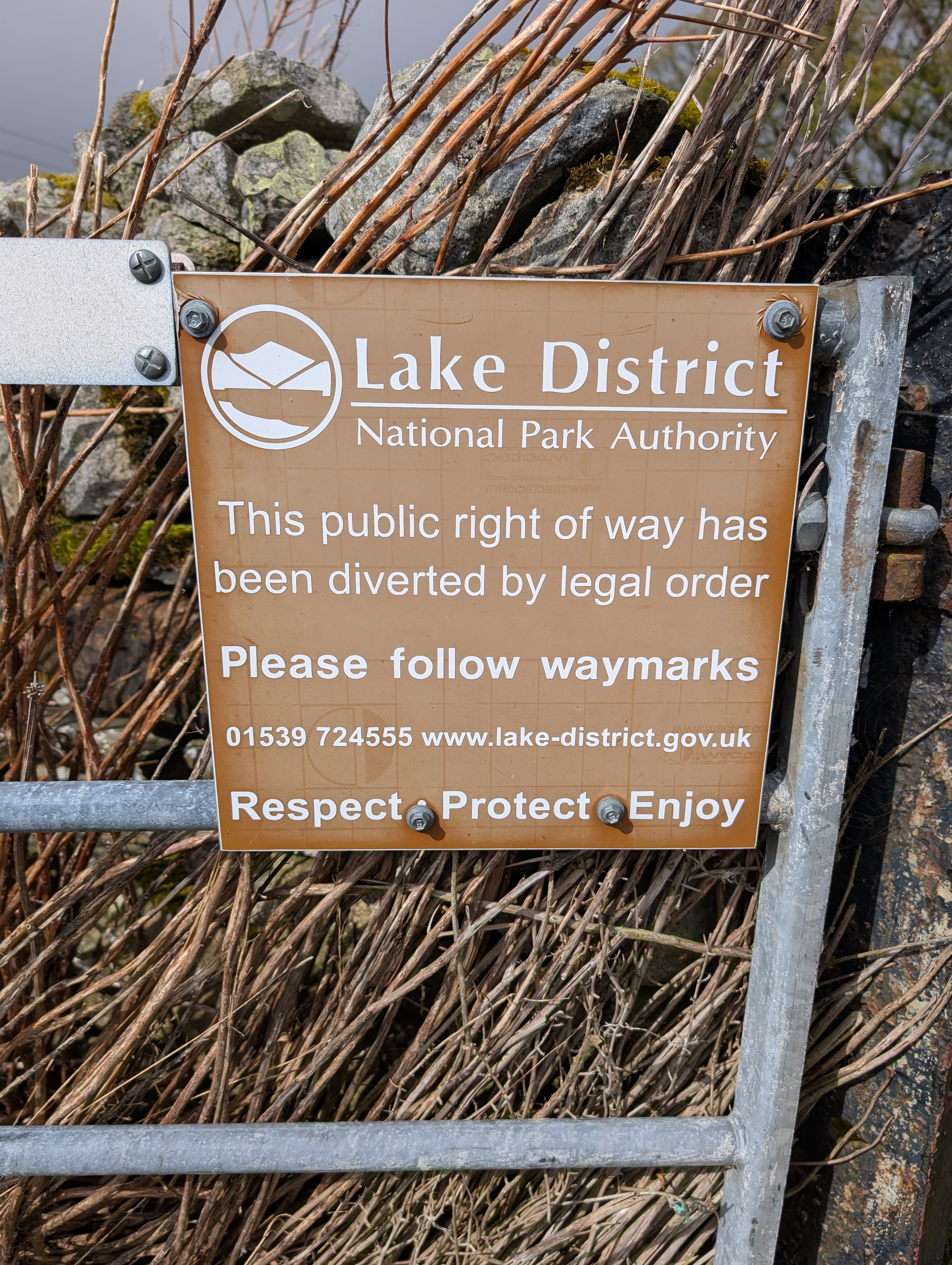
If a Public Footpath runs through a farmyard, garden, business premises or development site, the obvious question is often: “Can it be moved?”
The answer is yes, in some circumstances – but it must be done through a formal legal process.
Public Rights of Way are highways in law. That means they cannot simply be diverted by putting up a sign, fencing off the old route or encouraging people to use a different path. Until a legal order is confirmed, the original route remains the lawful highway.
There are several types of legal order that may apply, including:
- Public Path Diversion Orders – used where a landowner wishes to move a footpath or bridleway to a different route.
- Public Path Extinguishment Orders – used where a route is no longer needed for public use.
- Town and Country Planning Act Orders – used where a diversion is necessary to enable development to take place following planning permission.
For most landowners and farmers, the relevant process is usually a Public Path Diversion Order under the Highways Act 1980.
The authority considering the application will look at factors such as:
- Whether the proposed new route is convenient for the public.
- Whether it is substantially less enjoyable than the existing route.
- The effect on adjoining landowners and occupiers.
- Whether the diversion is in the interests of the landowner or the public.
A successful diversion often depends on good route design. A new path should usually be:
- Safe and accessible.
- Clearly defined.
- Convenient for users.
- Practical for land management.
Timescales can vary considerably. Some straightforward orders proceed relatively quickly, while others can take much longer if objections are received.
The key point is this: do not obstruct or alter a Public Right of Way before the legal process is complete. Taking early professional advice can help identify the best option and avoid costly mistakes.

Leave a Reply