
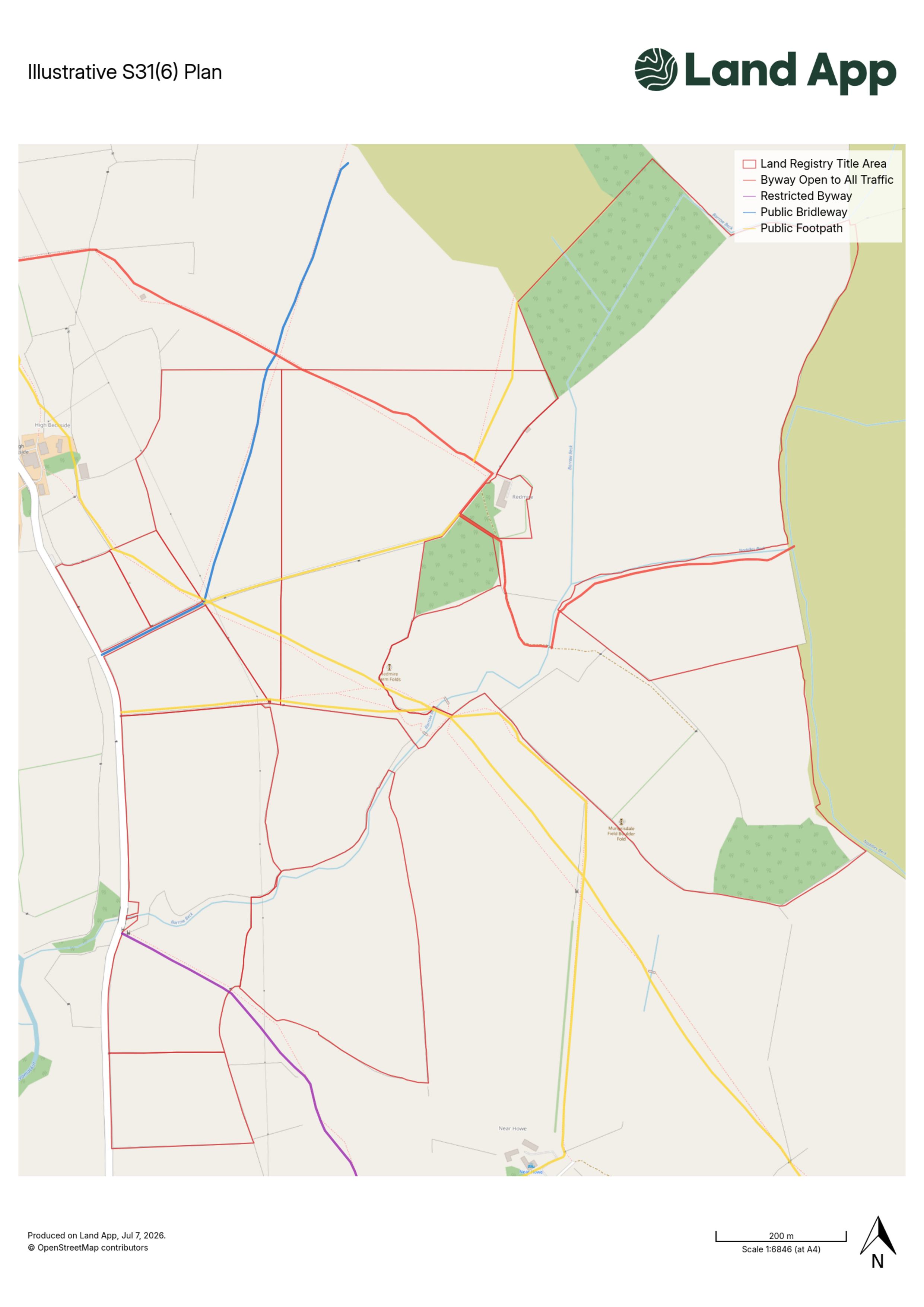
A Section 31(6) Deposit is one of the most effective legal tools available to landowners who want to protect their land from future public rights of way claims. Whether you own farmland, woodland, development land or a private estate, making one helps demonstrate that you have no intention of dedicating new public rights of way while continuing to manage your land with confidence.
Many landowners are happy to allow informal public access across tracks or estate roads. However, if that use continues over many years without challenge, it can sometimes lead to claims that a public right of way has been created. A statutory deposit provides an important safeguard against those claims.

What is a Section 31(6) Deposit?
Section 31 of the Highways Act 1980 allows a public right of way to be presumed where the public has used a route openly, without force or permission, and without interruption for at least 20 years. A landowner can rebut that presumption by showing they never intended to dedicate the route as a public highway.
The deposit allows a landowner to record:
- the land they own;
- the public rights of way they acknowledge across that land (if any); and
- that they have no intention of dedicating any additional public rights of way.
The relevant highway authority records the deposit on a public register, making the landowner’s position clear.
How Does the Deposit Work?
The process normally involves two stages.
First, the landowner submits a map showing the land together with a statement identifying any public rights of way they recognise.
The landowner then submits a statutory declaration confirming that they have not dedicated any additional public rights of way since the statement was made.
Together, these documents provide clear evidence that the landowner has no intention of creating further public rights of way over the land.
Why Make a Section 31(6) Deposit?
This procedure offers several practical benefits.
Protecting Against Future Claims
The main purpose is to protect land against future claims based on continued public use. Although it does not prevent every possible claim, it provides strong statutory evidence that the landowner did not intend to dedicate additional public rights of way from the date it was lodged onwards.
Allowing Informal Access
Many landowners want to maintain good relationships with neighbours and local communities by allowing informal access across private tracks or estate roads.
Making a deposit can reduce concerns that continued public use might later be relied upon to support a claim for a new public right of way.
Avoiding Unnecessary Restrictions
Without a formal deposit, some landowners feel they need to lock gates, erect fencing or regularly display notices simply to demonstrate that they have no intention of dedicating a public right of way.
Using the statutory procedure often provides a more practical and proportionate solution.
What Doesn’t a Section 31(6) Deposit Do?
It is an important legal safeguard, but it has limits.
It does not:
- remove or extinguish existing public rights of way;
- alter the Definitive Map and Statement;
- prevent claims supported by sufficient historical documentary evidence; or
- automatically defeat claims where the required period of qualifying public use had already been completed before the deposit was made.
For these reasons, it is usually better to make a deposit before concerns arise.
How Long Does it Last?
The deposit should normally be renewed by submitting a further statutory declaration within 20 years. If ownership changes, the new owner should also consider whether further action is needed to maintain protection.
Reviewing deposits regularly helps ensure they continue to provide the intended legal protection.
Who Should Consider One?
This process may benefit:
- farmers;
- estate owners;
- woodland owners;
- developers;
- commercial landowners;
- local authorities;
- educational institutions; and
- anyone managing land where informal public access takes place.
Every property is different, so obtaining professional advice can help ensure the correct approach is taken.
How CD Access Consultancy Can Help
At CD Access Consultancy, we advise landowners, developers, estate managers, local authorities and solicitors on all aspects of public rights of way law.
We can assist with:
- assessing whether a Section 31(6) Deposit is appropriate for your land;
- reviewing existing public rights of way and Definitive Map records;
- preparing compliant plans and supporting documentation;
- liaising with the relevant highway authority throughout the process; and
- advising on wider public rights of way matters affecting your property.
Our aim is to provide practical, proportionate advice that protects your interests while helping you navigate what can often be a complex area of law.
If you are considering making a Section 31(6) Deposit, or would simply like to understand your options, get in touch with CD Access Consultancy to discuss your circumstances.
Useful Resources
External links
- Highways Act 1980 – Section 31: https://www.legislation.gov.uk/ukpga/1980/66/section/31
- Legislation.gov.uk: https://www.legislation.gov.uk/
Leave a Reply